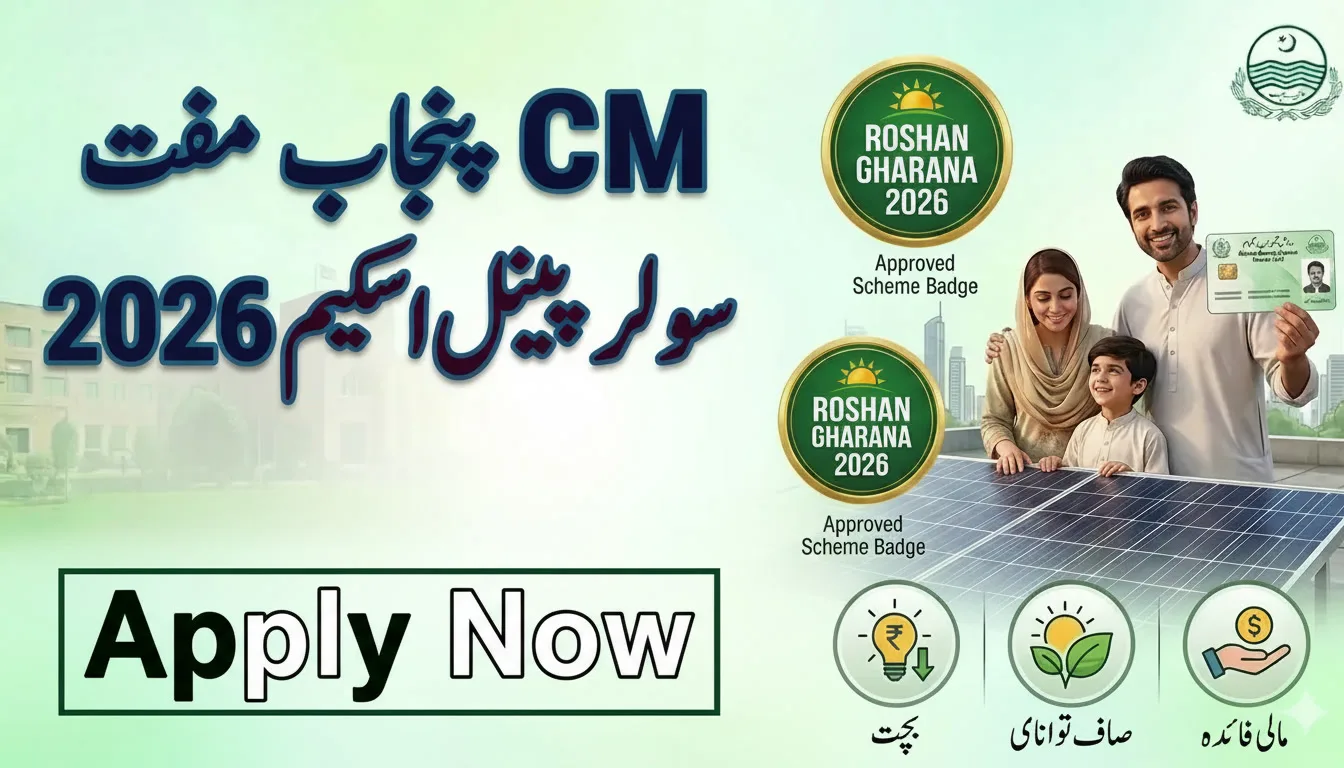
The Government of Punjab has launched an improved phase of its solar energy program under the leadership of Chief Minister Maryam Nawaz Sharif. This initiative focuses on helping households deal with high electricity bills and frequent power outages by providing affordable solar systems. The main goal is to promote clean energy while reducing financial pressure on families. Through a transparent digital system, the scheme ensures that deserving applicants receive support fairly. This program also encourages people to shift toward renewable energy for a better and more secure future.
Overview of the Solar Scheme Features
The Punjab Roshan Gharana Solar Scheme 2026 offers strong financial support and easy access to solar systems. Households consuming between 50 and 200 units can receive systems almost free, while others can benefit from up to 90% subsidy. The remaining cost can be paid in easy, interest-free installments over five years. Applicants can apply by sending their details through SMS or using the official online portal. This structure makes the scheme practical and accessible for a large number of residents.
Purpose and Benefits of the Scheme
This scheme is designed to provide long-term relief rather than short-term solutions. By installing solar systems, households can generate their own electricity and reduce dependency on the national grid. This leads to lower monthly bills and protection from rising energy costs. At the same time, it supports environmental protection by reducing carbon emissions. The initiative also strengthens the overall power system of the province by distributing energy production across homes.
Eligibility Criteria for Applicants
To apply for the scheme, applicants must be permanent residents of Punjab with a valid CNIC showing a local address. The program mainly targets households consuming between 50 and 500 electricity units per month. Applicants must have a clean record with no unpaid bills or involvement in electricity theft. Additionally, they should have legal rights to install solar panels on their property, either as owners or with permission from the landlord.
Categories of Financial Support
The scheme is divided into two main categories to support different income groups. Households using up to 200 units can receive nearly free solar systems. Those consuming between 200 and 500 units can get a 90% subsidy, with the remaining cost payable in easy installments. This approach ensures that low-income families receive maximum benefit while middle-income households also get significant support.
Required Documents for Application
Applicants need to prepare certain documents before starting the process. These include a valid CNIC, recent electricity bills showing usage history, and the bill reference number. If the applicant is a tenant, a No Objection Certificate from the property owner is also required. Having digital copies of these documents helps speed up the application process and reduces the chances of rejection.
Step-by-Step Online Application Process
The registration process is simple and fully online. First, applicants must create a profile on the official solar portal using their mobile number. After verifying their number through OTP, they need to fill in the application form with electricity bill details. The system automatically checks eligibility and assigns the correct category. Applicants then upload required documents and submit the form. A tracking ID is generated, which can be used to monitor application status.
Selection and Verification Process
After the application deadline, the selection process is conducted through a computerized balloting system managed by the Punjab Information Technology Board. This ensures complete transparency and fairness. Selected applicants receive confirmation through SMS. After selection, a technical team visits the site to inspect roof conditions and sunlight exposure. If everything is suitable, installation is completed within a few weeks.
Technical Details of the Solar System
The solar systems provided under this scheme are built using high-quality components. They include advanced monocrystalline solar panels that perform efficiently even in low light. A hybrid inverter is also installed to manage both solar and grid electricity. The system size depends on household usage and is designed to support basic appliances like fans, lights, and small devices. Warranty and maintenance support are also included for user convenience.
Tracking Your Application Status
Applicants can easily track their application status online through the portal. By entering their CNIC and tracking ID, they can check whether their application is under review, approved, or selected. If there are any issues, the system provides updates so corrections can be made quickly. This removes the need to visit offices and makes the process more efficient.
Importance of Solar Energy for the Future
Solar energy plays a vital role in solving energy shortages and environmental problems. It provides a reliable and clean source of power that reduces dependence on fossil fuels. As more households adopt solar systems, the overall burden on the national grid decreases. This leads to fewer power outages and a more stable energy supply. It also helps in building a cleaner and healthier environment for future generations.
Conclusion
The Punjab Roshan Gharana Solar Scheme 2026 is a powerful step toward energy independence and financial relief for the public. With high subsidies and easy installment plans, it makes solar technology affordable for many households. The transparent digital system ensures fairness, while the long-term benefits make it a smart investment. Eligible applicants should apply as soon as possible to take full advantage of this opportunity and secure a reliable energy source for their homes.